
Backsheet Durability Sequence

Backsheet Durability Sequence

Icon

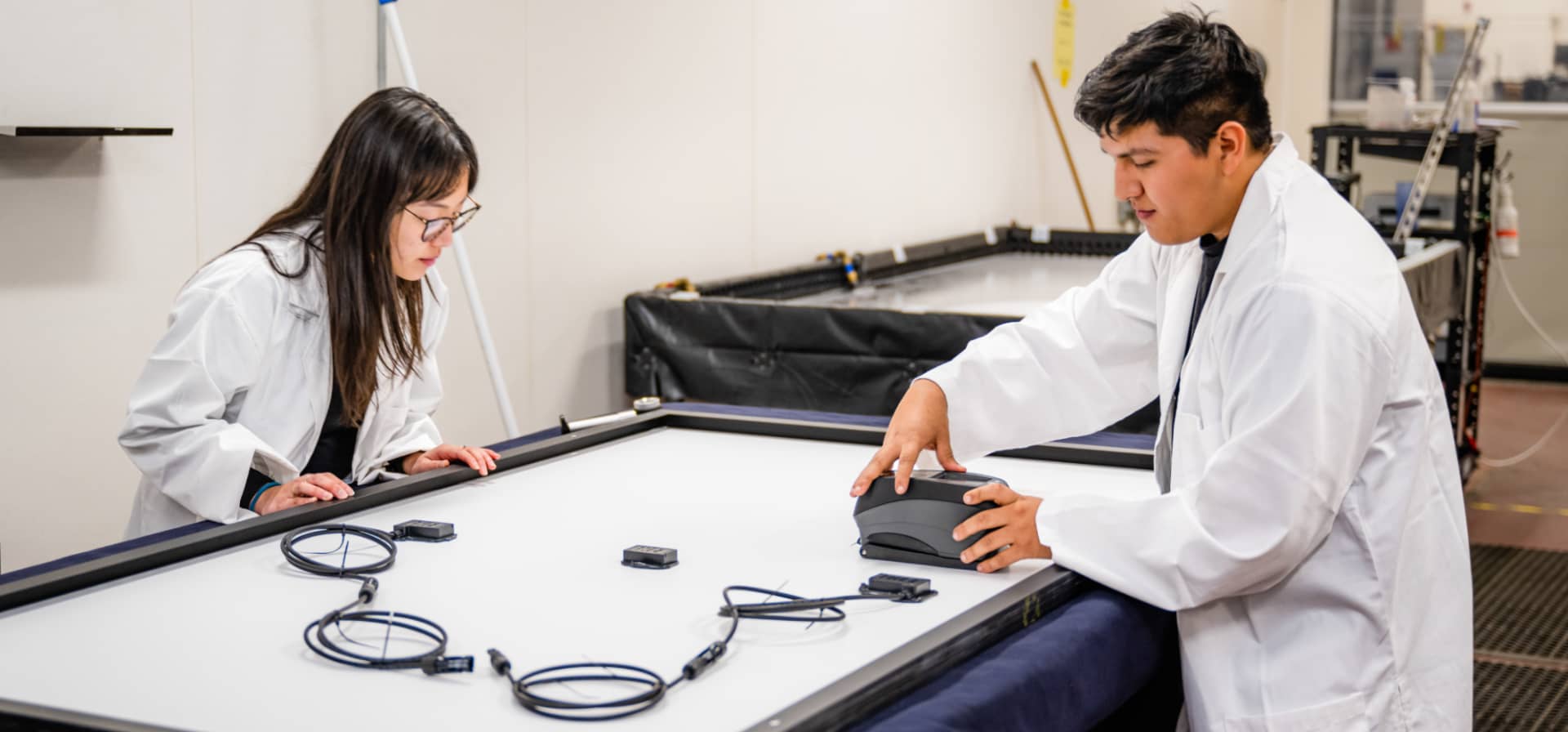
The PQP’s Backsheet Durability Sequence (BDS) goes well beyond IEC/UL certification requirements to effectively evaluate backsheet reliability, focusing on risks like yellowing and cracking due to polymer degradation. This test uses UV light, high temperature and humidity, and temperature cycling to simulate conditions that can lead to material degradation in the field. Backsheet durability is critical for all modules as backsheet cracks can compromise both performance and safety, but it is especially important for sites in high irradiance and high albedo conditions.

Key
Takeaways

BDS test results remain encouraging.

Of the approximately 140 commercially available backsheet models, the 2023 Scorecard dataset includes 23 different backsheet models. None of those tested exhibited backsheet cracks following BDS testing. The outer layer of the tested backsheets used a variety of materials including fluororesin, PET, PVDF and PVF, and were transparent, white and black.

Test Result Spotlight

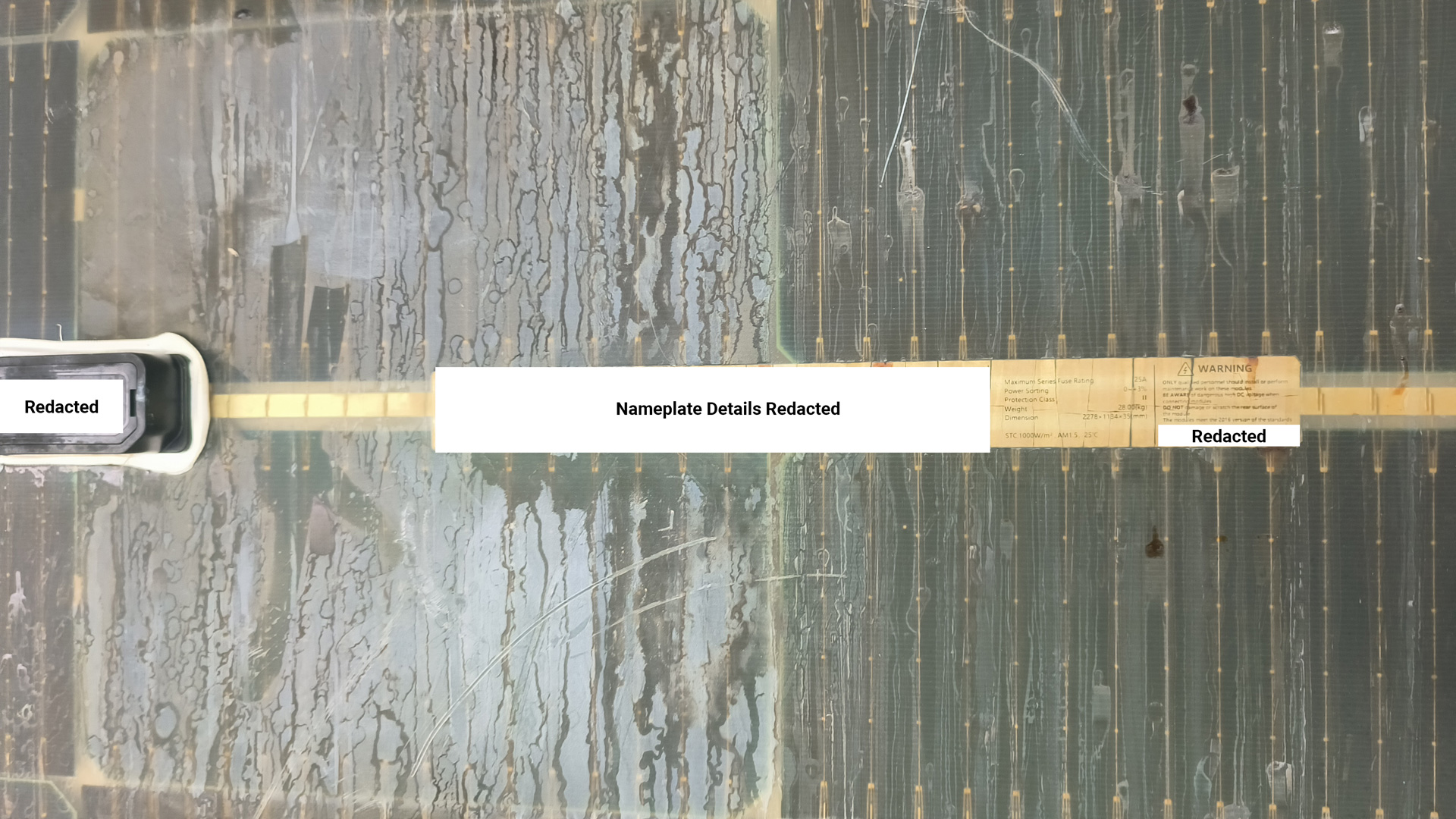
A recently tested BOM provided the most striking example of material degradation since the launch of the BDS testing in 2019. After the second round of UV exposure (i.e., following DH1000+UV65+TC50+HF10+UV65) the delta b* spiked to an average of 16.2. The modules also showed signs of a substance diffusing out of the backsheet and reacting with the moisture from the humidity freeze (HF) testing portion of BDS. This also resulted in the nameplate cracking and discoloring.
Test Result Spotlight

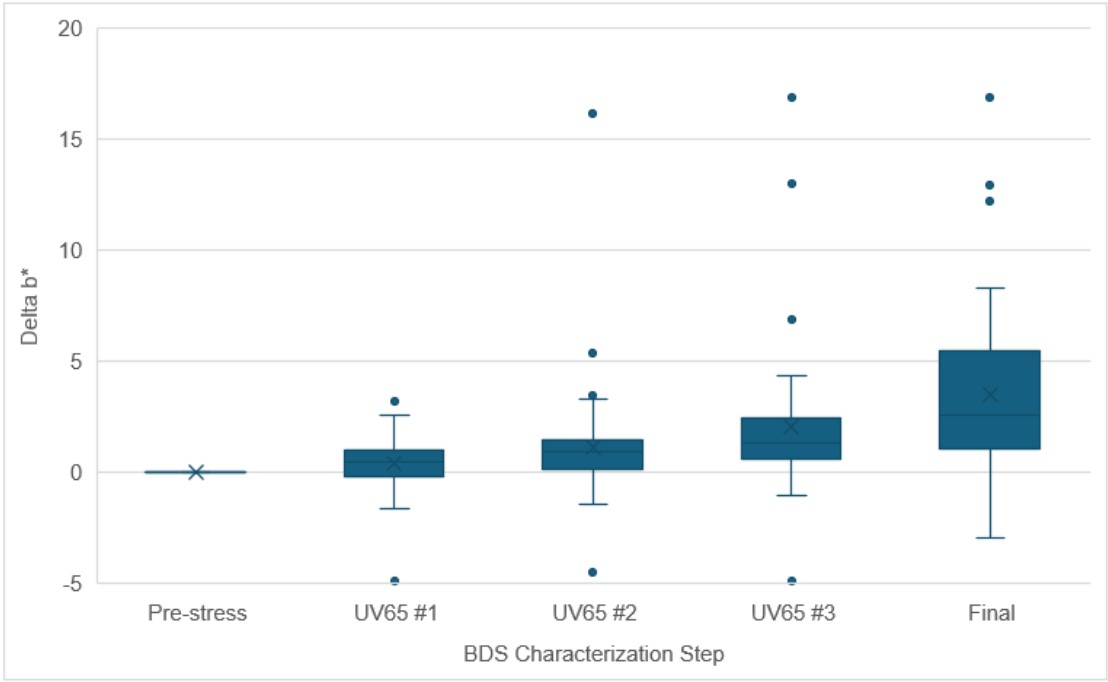
BDS Test Population Yellowness

Power degradation chart for BDS stress sequence

During BDS testing Kiwa PVEL performs colorimeter measurements at 10 different backsheet locations for two identical samples per BOM. The measurements use the Commission Internationale de l’Eclairage (CIE) L*a*b* coordinate system, with b* representing the yellow/blue coordinate. As yellowness increases so does the b* value. BDS reports include a graph showing the average difference in b* values (“delta b star”) throughout BDS testing to help quantify the change in yellowness. A broad range of delta b* values have been measured across almost 70 BOMs of BDS testing, indicating that some BOMs are more vulnerable to yellowing than others.

View Box Plot Interpretation Guide

A case study on why BDS is important, what PV module materials are assessed, and the test procedure for BDS can be found here on kiwa.com/pvel.

Procure better modules. Get access to the
Scorecard data every quarter.

Sign up as a Kiwa PVEL Premium Partner

SIGN UP →

Continue Exploring the 2024
Scorecard

NEXT PAGE →